Russian Art of World War 2 Russian Art of World War 2 With Artists
Unknown Russian artists have staged protests on live television set or put on performances in front of the Kremlin. Today, their whereabouts are unknown. But how many famous Russian artists take protested Vladimir Putin's invasion of Ukraine? One is, at least.
Maxim Kantor was raised in Moscow just has since left Russia. He was educated at the Moscow Country University of Printing Art and is a member of the Russian University of Art. In 1997, he represented Russia at the Venice Biennale. He was in one case asked past Putin's regime to be a Russian state Commissar for the Arts.
Yet today, at the National Museum of History and Art in Luxembourg, an exhibition of Kantor'due south paintings will go on brandish—and the championship of the exhibition could not be more pointed: The Rape of Europe. The exhibition will be on show until xvi October.
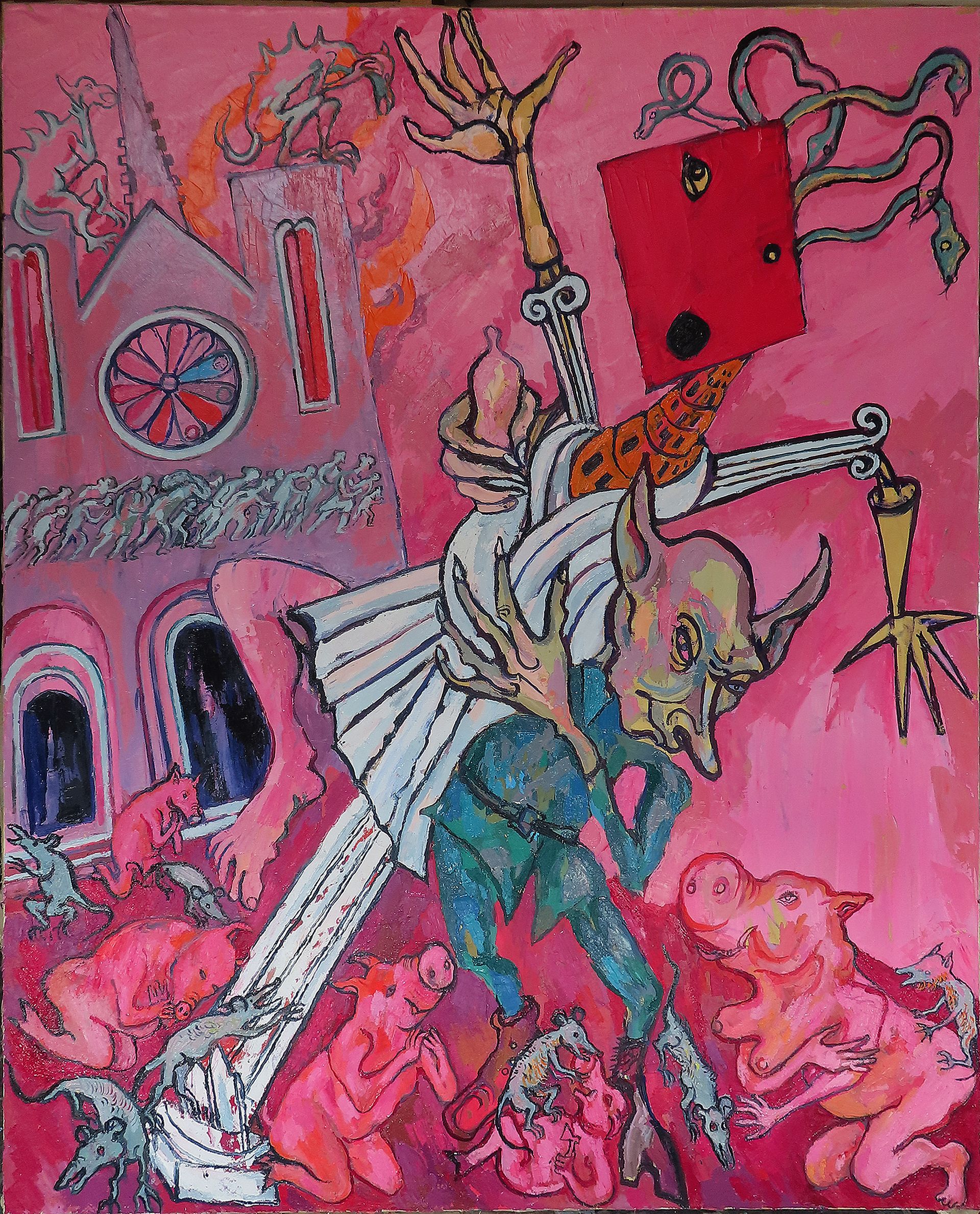
Maxim Kantor's The Rape of Europe (2022) © Proverb Kantor, courtesy of the artist
The exhibition, Kantor says in an interview, was put together in six weeks "nether emergency conditions." Information technology features works the artist created as recently as this year and is staged with an ambition: to "unmask" the Russian authorities, and to awaken the states—the citizens of Europe—to the dangers nosotros, as a continent, confront from the Kremlin. "Ukraine is nether assail. But Europe is nether set on as well," Kantor tells The Art Paper. "We do not however realise this, and we merely have to."
Kantor's paintings are as confrontational as his championship; ghoulish and haunting denouncements of "this vile war of Neo-feudal lords," he says. They are Russian paintings, he adds; created in the legacy of Tolstoy and Pasternak. They are narrative-led, and made to shake us from our complacency. "The state of war was not a surprise to me," Kantor says. "It is one of the links in the concatenation. It is not the get-go event and will not be the last event."
Yet the exhibition is more than than just an anti-war argument; it challenges the states to enquire if nosotros are complicit in the "rape" of Europe. "Today, there is a lot of talk that this war tin can break the Putin regime," Kantor says. "Just no ane talks about where this authorities came from. No 1 is talking near how it took root in our globe lodge."
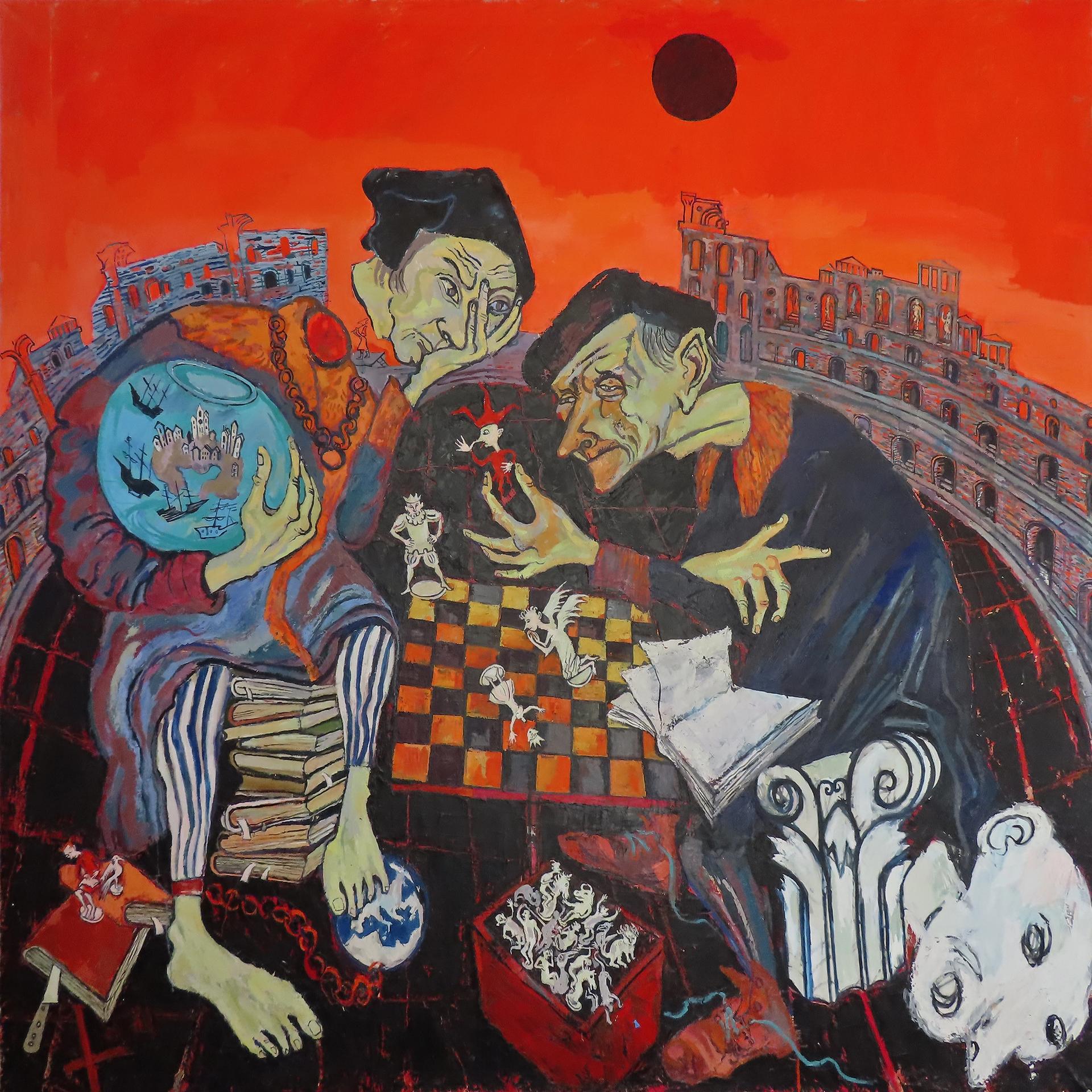
Maxim Kantor's Erasmus and Thomas More © Maxim Kantor, courtesy of the artist
How has the fine art world enabled Putin? How guilty is the art earth in letting Russian influence embed itself into our capitals? These are difficult questions—and Kantor is intent on facing them caput on. "I dream of a post-war trial that would show how 'contemporary art' participated in the preparation of cannon fodder," Kantor writes in the show'due south introductory text. "I dream of a trial that would reveal the mechanism of the fine art market, which turned bankers into artists in the service of a tyrant."
"These are explicitly political pictures," says Stephen Whitefield, a professor of politics at the Academy of Oxford, and a friend of Kantor's. "They were fabricated as a response to Russian federation's perverted integration into Europe and the Western economy."
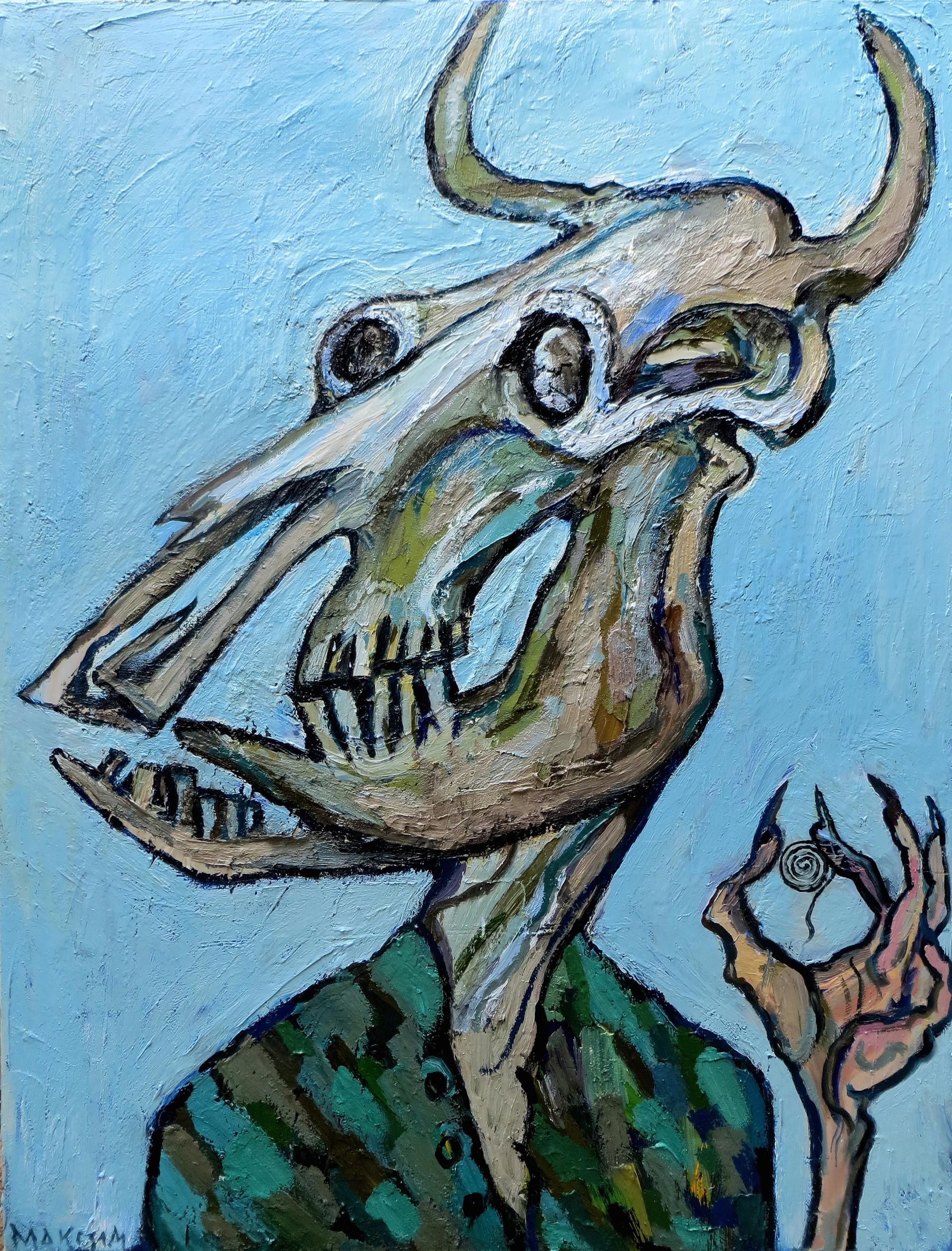
Maxim Kantor's Minotaur (2014) © Maxim Kantor, courtesy of the artist
Russian federation's invasion of Ukraine has thrown into question the very purpose of institutional exhibitions, the museum'due south director Michel Polfer says.
"Tens of thousands are dead, cities are partially razed, millions of Ukrainian refugees are wandering across Europe. How to react, as a museum?" Polfer asks when introducing the bear witness. "How to show a sign of solidarity with the oppressed, when directly cooperation with a Ukrainian museum is currently proving impossible and our ain collections contain almost no objects related to this land?"
Kantor says, nonetheless, that he retains religion in the people of his homeland. "Putin sees his people equally stupid puppets," he says. "He thinks of them as pawns on his chess set. The Russian people have been robbed and cheated and fed lies, but they cannot be lied to when their children are dying in Ukraine."
The pictures on prove, Kantor adds, are "dedicated to the people who have been oppressed by the Russian land" for it is them who can end the state of war, Kantor says. "At that place are many Russian people who are against this bloody state of war," he says. "I can tell y'all that. They are waking upwards, and they will resist."
• The Rape of Europe is staged in collaboration with the Luxembourg Red Cross, and donations are sought from visitors
0 Response to "Russian Art of World War 2 Russian Art of World War 2 With Artists"
Post a Comment